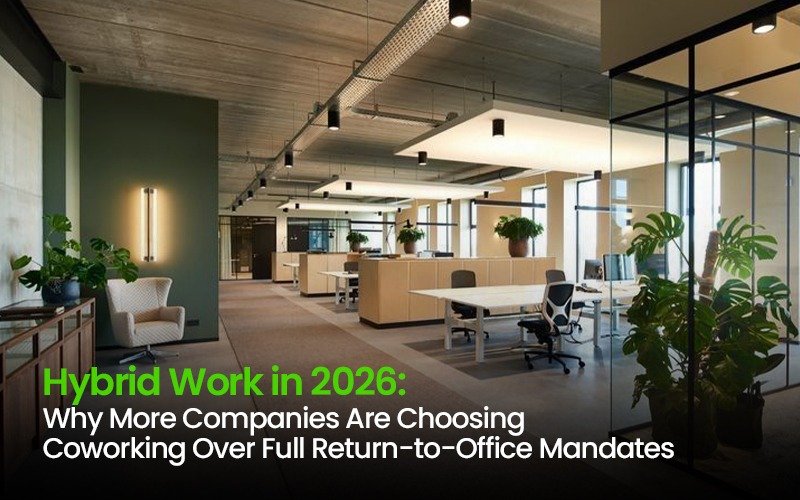

Why Employees Are Rejecting RTO Mandates and Companies Are Embracing Coworking

hybrid work coworking 2026

Why Employees Are Rejecting RTO Mandates and Companies Are Embracing Coworking

In 2026, the global workforce has reached a definitive crossroad. While the initial “honeymoon phase” of remote work has faded, it hasn’t been replaced by a nostalgic return to the traditional corporate campus. Instead, we are seeing the rise of Coworking 2.0—a strategic pivot where 55% of global corporations now integrate flexible workspaces into their core real estate portfolios.

This shift represents a move away from the “all-or-nothing” mandates of the past. Companies have realized that rigid Return-to-Office (RTO) policies often trigger “quiet cracking”—a phenomenon where employees remain in their roles but disengage due to burnout and a perceived loss of autonomy. By choosing coworking over traditional leases, organizations are attempting to solve a complex puzzle: how to foster culture and “accelerated decision-making” without the financial and cultural baggage of a 10-year lease

Key Drivers Behind the Coworking Shift

Flexibility Without Long-Term Risk

Companies can now secure professional workspace with short-term agreements (30–90 day onboarding, 1–3 year leases with exit options) instead of being locked into traditional 10-year commercial leases.             This agility is critical as AI-driven workforce uncertainty makes long-term real estate commitments risky.

Significant Cost Savings

Coworking eliminates major overhead:

  • No brokerage or attorney fees for lease negotiations
  • Reduced construction, fit-out, and maintenance costs
  • Scalable pricing that aligns with actual usage

Real-world impact: T-Mobile cut real estate costs by 80% using flexible workspace platforms, while Allstate reduced annual corporate office spending from $382 million (2020) to $138 million after shifting a quarter of its workforce to coworking spaces

Managing Employee Resistance to RTO Mandates

  • Hardline return-to-office policies face real pushback:
  • 1 in 5 employees ignore RTO mandates; 40% of managers don’t enforce them
  • Only 42% of employees would comply with a 5-day RTO requirement

Companies with flexible policies outperformed rigid peers by 16 percentage points in revenue growth

Coworking offers a “soft landing”: employees gain access to professional, collaborative environments without the friction of mandatory headquarters commutes.

Geographic Accessibility & Talent Retention

Companies are deploying coworking hubs closer to where employees live—suburban and secondary markets like Austin, Denver, and Miami—reducing commute times while maintaining in-person collaboration benefits. This addresses a key employee demand: “a great day at work” regardless of location

Enterprise-Grade Amenities Without the Overhead

  1. Modern coworking spaces now offer:
  • Modular layouts for teams to shift between private offices and collaboration zones 

  • Integrated technology: smart booking systems, hybrid meeting tools, and AI-powered space optimization 

  • Wellness-focused design: mental health resources, quiet zones, and community programming 

Key Features of a Co-Working Space:

Shared Infrastructure:

Desks, meeting rooms, high-speed internet, printing services, kitchens, and lounges — all maintained and ready for immediate use, reducing setup costs and administrative overhead for members.

Flexible Membership Options:

Day passes, monthly memberships, or dedicated desks/private offices — scale your space up or down based on project needs, team size, or budget without long-term lease commitments.

Community & Networking

Events, workshops, and informal gatherings to foster collaboration and connections — access a diverse pool of professionals, freelancers, and startups for knowledge sharing, partnerships, and growth opportunities.

Professional Environment:

Offers a productive, business-like atmosphere — ideal for client meetings, focused work, or video calls, providing structure and credibility often missing from home or café settings

Amenities:

Often include perks such as coffee, snacks, mail handling, and 24/7 access — enhancing convenience, work-life balance, and operational efficiency without extra management effort.

Who Uses Co-Working Spaces?

  • Freelancers and solopreneurs
  • Remote employees of larger companies
  • Startups and small teams
  • Digital nomads
  • Consultants and creatives

Why More Companies Are Choosing Coworking?

  • Cost Efficiency & Scalability: Eliminate upfront capital expenditure on fit-outs, furniture, and IT infrastructure — pay only for the space you use, with the flexibility to scale up or down as team size or business needs change.
  • Operational Flexibility: Short-term agreements and on-demand access to global locations support remote teams, hybrid work models, and market expansion without the burden of traditional leases.
  • Access to Talent & Locations: Establish a professional presence in prime business districts or new cities quickly — attract talent who value flexible, well-located workspaces without committing to long-term real estate.
  • Enhanced Employee Experience: Modern amenities, wellness-focused design, and community perks boost satisfaction, retention, and productivity — especially valued by younger, mobile-first workforces.
  • Innovation & Collaboration: Proximity to diverse professionals, startups, and industry events sparks cross-pollination of ideas, partnerships, and fresh perspectives that can accelerate growth and creativity.
  • Risk Mitigation: Reduce long-term liability and overhead in uncertain economic climates  coworking offers agility to pivot, downsize, or experiment with new teams or markets with minimal financial exposure.
  • Focus on Core Business: Outsource facility management, IT support, and administrative tasks to the coworking provider  freeing leadership and HR to concentrate on strategy, culture, and growth.

conclusion

As the dust settles on the hybrid work evolution of 2026, the verdict is clear: the “all-or-nothing” approach to office space is obsolete. Coworking 2.0 has emerged not merely as a trend, but as a strategic imperative for organizations seeking agility without sacrificing culture. By swapping rigid long-term leases for flexible workspaces, companies are simultaneously slashing overhead, mitigating real estate risk, and honoring the employee demand for autonomy. Ultimately, the future of work isn’t defined by a specific location, but by the flexibility to adapt. For businesses aiming to retain top talent and thrive in an uncertain economic landscape, embracing coworking is no longer just an option—it’s the competitive edge that will define the next decade of corporate success.

Post Your Comment

GreenNest Business Centre
Privacy Overview

This website uses cookies so that we can provide you with the best user experience possible. Cookie information is stored in your browser and performs functions such as recognising you when you return to our website and helping our team to understand which sections of the website you find most interesting and useful.