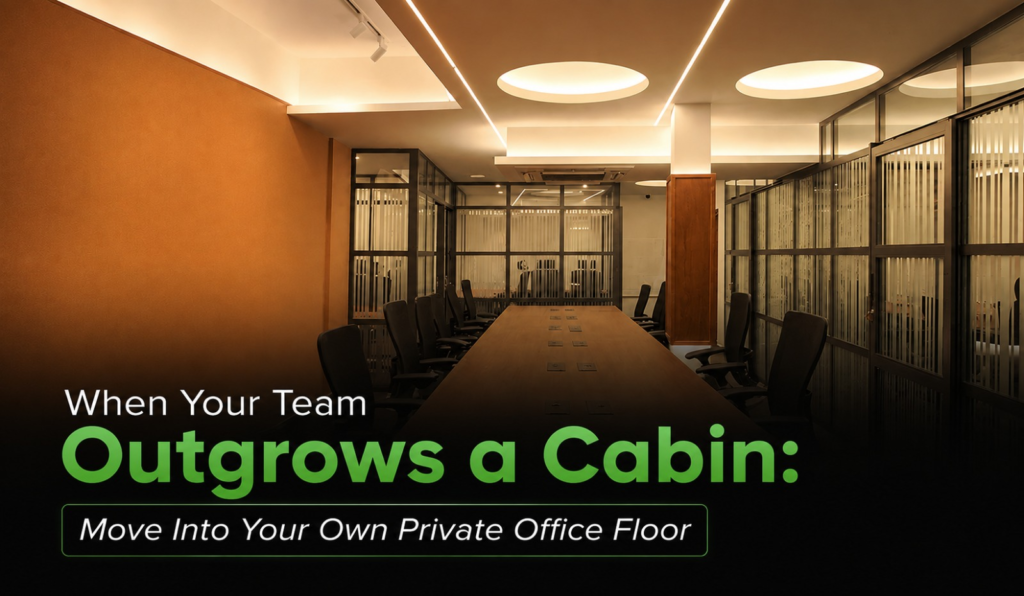
There’s a specific moment every growing company hits, and it rarely shows up on a spreadsheet first. It shows up as a feeling. Someone walks a client through your 12-seater cabin, past three other conversations happening within earshot, and for a second you see your own office the way a visitor does, a little cramped, a little shared, a little less “yours” than it needs to be. That feeling is data too. It’s telling you that your team has outgrown the cabin model, even if the seat count hasn’t quite proven it yet.
The instinct at that point is usually to assume there are only two paths forward: stay flexible and shared, or go fully private and start from scratch with a traditional lease. Neither is quite right, and the numbers behind modern workplace design explain why. A dedicated, exclusive floor turns out to solve problems that neither a shared cabin nor a from-scratch lease fully addresses on its own.
The false choice most growing teams are given
Shared coworking cabins are fast and flexible. You can be seated within 48 hours, terms are month-to-month or lightly committed, and there’s no upfront capital tied up in furniture or fit-out. But cabins are capped in size, and no matter how private the room feels, the building itself still belongs to several other companies.
The other option, a traditional unfurnished lease, solves the exclusivity problem but introduces a different set of costs. Fit-out and furniture procurement typically add 8 to 12 weeks before anyone can move in. Deposits, furniture, and infrastructure are paid upfront and separately from rent. Fit-out cost benchmarks for Indian office markets from JLL and Cushman & Wakefield’s 2026 guides put medium-specification build-outs at roughly ₹5,800 to ₹6,570 per square foot, meaning a modest 6,000 sq ft office can require ₹3.5 to ₹4 crore in fit-out capital alone, before furniture, AV, and IT integration are even added. Mumbai and Delhi run at the higher end of that range; even in a cost-efficient market like Kochi, that’s a significant sum to commit before a single employee has sat down, and it gets locked into a lease running five to ten years or longer, regardless of whether headcount grows, shrinks, or simply changes shape.
This isn’t a Kochi-specific problem, it’s a structural shift playing out across Indian commercial real estate right now. According to CBRE and FICCI’s “Flex-plosion: India’s Flexible Workspaces Era” report (March 2026), India’s flexible workspace stock has tripled since 2020 to cross 110 to 114 million square feet, growing at a 23 to 25% annual rate over five years. Enterprise seat uptake, large companies taking flexible space rather than traditional leases, is forecast to hit 200,000 seats a year in both 2026 and 2027, a 25% jump over current levels. JLL India recorded flex space climbing to 21% of all office leasing nationally in Q1 2026 alone, up from just 14% a year earlier. And this isn’t small businesses driving it: 65% of Indian office occupiers now plan to build flexible workspace into their real estate strategy by 2027, up from 55% today, according to CBRE.
A large share of that demand is coming from Global Capability Centres (GCCs), the India delivery arms of international companies, which are expected to account for nearly half of all enterprise flexible-space uptake through 2027. For Kochi specifically, where GreenNest already serves international and GCC businesses through its Backend Office offering, this national shift is a preview of local demand: companies that need a serious, exclusive India presence, delivered faster than a traditional lease allows.
What actually breaks first in a shared setup
It’s rarely the seat count alone. What breaks first is usually one of three things:
The client experience. A boardroom-quality moment doesn’t happen well in a shared cabin with other companies’ meetings audible next door. First impressions with clients and investors are hard to walk back.
Confidentiality and focus. Workplace acoustic research is unusually consistent on this point: over 71% of office workers say effective noise control is critical to how well they can do their job, yet only 33 to 44% report being satisfied with the acoustic conditions of their actual workplace, a gap of roughly 34 percentage points. Much of that gap comes from something researchers call the “halfologue” effect, overhearing one side of a nearby call is enough to pull the brain into involuntarily predicting the missing half of the conversation, quietly draining focus even when people try to tune it out. Sustained background noise above 55 decibels has been linked to a roughly 25% increase in negative mood and stress. In fully open, unmanaged layouts, this shows up in harder-to-see ways too: one widely cited Harvard Business School study found face-to-face interaction dropped by around 70% after a move to fully open seating, while electronic messaging volume rose by about 50%, the opposite of what open layouts are usually adopted to achieve. Open-plan environments have also been associated with up to 66% more sick leave compared to more controlled office settings.
Identity. A generic shared floor, however well-designed, still reads as “a company renting space here” rather than “this is our office.” Workplace studies comparing custom, brand-aligned environments to generic ones have found roughly 80% of employees in customized spaces reporting high satisfaction and productivity, compared to just 42% in generic setups, a gap driven almost entirely by whether the space felt like it genuinely belonged to their company. It’s a big part of why the “flight to quality” that CBRE’s India research flags, occupiers increasingly favouring premium, highly amenitised, identity-rich space over bare, price-driven square footage, is showing up as strongly in Indian leasing decisions as anywhere else.
The solution: exclusivity without the wait
This is exactly the gap GreenNest’s single-floor office space in Kadavanthra is built to close. Instead of choosing between shared-and-fast or private-and-slow, GreenNest offers a third option: an entire floor, leased exclusively to one company, furnished and ready to move into within 48 hours, the same speed as taking a single cabin, at the scale of a full private office.
Why having the whole floor, not just a bigger cabin, actually matters
The benefit of a single-floor lease isn’t simply “more space.” It’s what exclusivity unlocks that a shared arrangement structurally can’t:
Real acoustic and information control. When the floor is entirely yours, you set the acoustic zoning, quiet rooms for deep work, open areas for collaboration, a private boardroom for anything confidential, instead of inheriting someone else’s noise. Workplace studies of well-executed activity-based layouts like this show measurable gains: around a 17% lift in employee satisfaction, a 12% increase in self-reported productivity, and a 21% rise in reported corporate pride, compared to static, undifferentiated layouts.
Genuine data and physical security. An exclusive floor means no other company’s staff, guests, or devices share your network or walk your corridors. For teams handling client data, financial records, or proprietary work, that’s not a nice-to-have, it’s the baseline a shared cabin, however private the room, can’t fully guarantee.
A layout that’s actually yours. The floor can be configured as open workstations, private manager rooms, a boardroom, or a fully custom layout specified by your team, task-matched design has been shown to lift self-rated performance by 8 to 12% over rigid, one-size-fits-all office formats.
A single, predictable cost structure. Instead of a large, uncertain upfront capital outlay, in the crores, per the fit-out benchmarks above, followed by years of fixed rent regardless of how your team changes, a furnished floor converts everything, furniture, internet, power backup, security, housekeeping, into one predictable monthly arrangement. This is precisely the logic behind India’s flex-space boom described earlier: companies are shifting real estate spend from unpredictable, upfront capital expenditure to a manageable, scalable operating cost, freeing up capital for hiring, product, or expansion instead of sinking it into square footage.
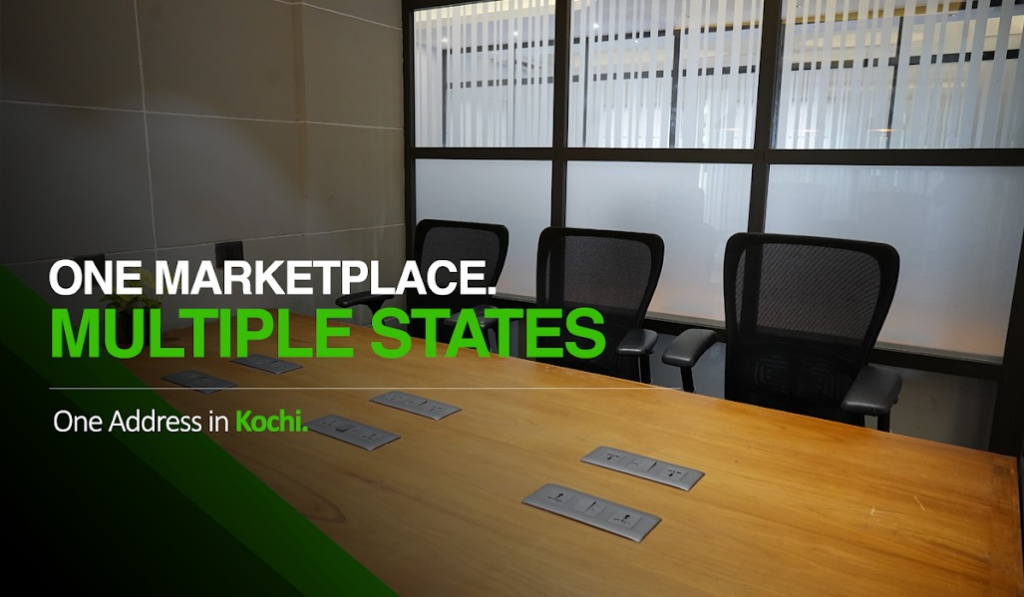
Enterprise-grade infrastructure, without the enterprise-grade timeline. Gigabit fibre internet with failover, 24/7 power backup via DG and UPS, biometric access control, CCTV coverage, and daily housekeeping, the same standard applied to every cabin at GreenNest, delivered at floor scale, already built and tested before you move in.
One lease, one point of contact. No separate contracts for furniture, internet, security, and facilities management, one agreement, one team to call.
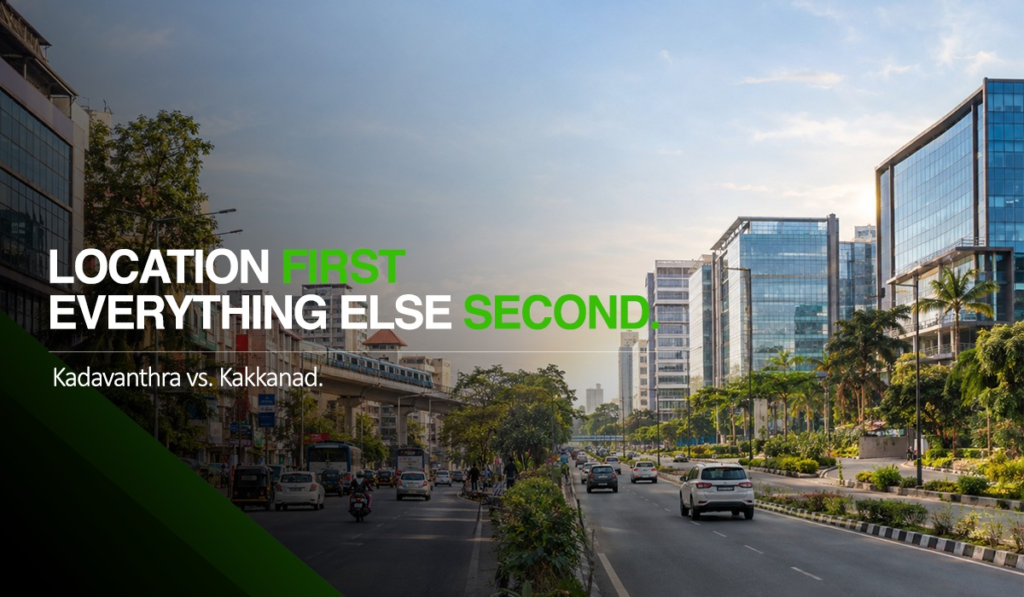
A serious, well-connected address. Located in Kadavanthra, just 600 metres from Kadavanthra Metro Station, on one of Kochi’s core commercial corridors.
Why a central, metro-connected address matters as much as the floor itself
An exclusive floor solves the “who else is in this building” problem. Location solves a different one: whether people actually want to come in.
Hybrid attendance is a choice employees make every day, and that choice is disproportionately shaped by commute friction. A headquarters tucked away in an outer business park might look identical to one in the city centre on a floor plan, but the two produce very different in-office attendance rates once real commute times enter the picture. A central, metro-adjacent address removes the single biggest reason hybrid employees skip their in-office days.
Being in the centre of the city compounds the value of having the whole floor in a few concrete ways:
Talent access and retention. For roles competing on flexibility and convenience, a short, metro-connected commute is a genuine differentiator when candidates are weighing offers, especially for teams pulling talent from across a spread-out city rather than one neighbourhood.
Client and partner convenience. A central address is an easy “yes” for a client deciding whether a meeting is worth their time. An out-of-town business park adds a mental tax to every visit, a central location removes it.
Faster access to the wider business ecosystem. Banks, government offices, vendors, and partner companies cluster in city centres for a reason. Being embedded in that corridor, rather than isolated from it, cuts down on the small logistical friction that adds up across a normal working week.
Brand perception. Address still functions as a signal. A city-centre location, on a well-known commercial corridor, reads as an established, serious operation in a way a peripheral location has to work harder to convey, reinforcing exactly the identity and pride an exclusive floor is meant to project.
GreenNest’s Kadavanthra floor sits 600 metres from Kadavanthra Metro Station, inside Kochi’s core commercial district, with on-site parking for teams that drive in. The result is a workspace that’s exclusive without being remote, your team gets the privacy of its own floor and the convenience of a genuinely central address, rather than trading one for the other.
Why this beats building it yourself
Set the two paths side by side and the case for a furnished floor becomes clear. A traditional unfurnished lease means 8 to 12 weeks before move-in, six or seven figures in upfront capital, multiple vendors to manage, and a fixed lease term that doesn’t move with your team. GreenNest’s whole-floor lease compresses all of that into a 48-hour move-in, one point of contact, infrastructure that’s already in place, and the flexibility to move between cabin sizes or the full floor as your team’s shape changes over time, without the empty-space overhang that traditional leases so often carry.
Who this is actually for
This isn’t the right call for every team, cabins remain the smarter choice for smaller groups that don’t yet need floor-scale space. But the whole-floor lease is worth a serious look if you recognize your company in any of these:
- A startup that’s just closed a funding round and is consolidating people spread across two or three separate cabins into one cohesive space.
- An enterprise opening a dedicated delivery, support, or operations team in Kochi that needs its own footprint, not a shared building.
- An international or GCC company setting up a genuine local office, one with its own identity and security posture, rather than a shared virtual presence.
In each case, the underlying need is the same: a space that behaves like a real headquarters, with the control, privacy, and identity that only comes from having the whole floor to yourselves, without the months of setup a traditional lease demands.
See both options in the same visit
You don’t have to decide on paper. GreenNest’s team can walk you through the available private cabins and the single-floor office space in the same site visit, so you can see the difference in person before making a call. If your team has reached the point where a cabin no longer fits how the business actually operates, that visit is worth booking.
Ready to see what an exclusive floor at GreenNest looks like for your team? Enquire about the single-floor office space or call +91 90726 83999 to arrange a visit.