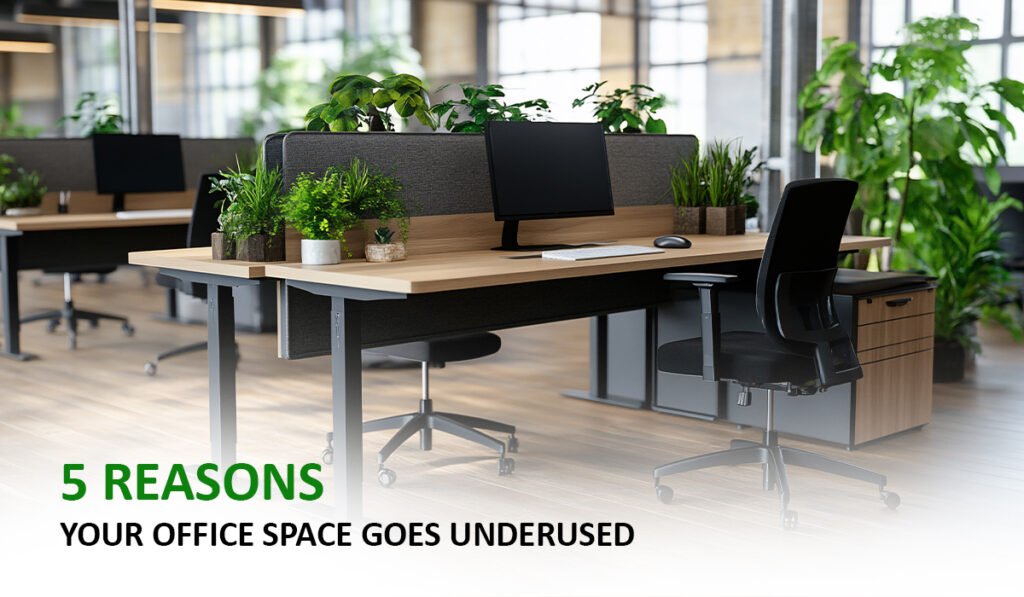
Many professionals rent office space but never really use it. Desks stay empty, meeting rooms go unused, and facilities sit there without serving their purpose. On the surface, everything seems fine, but these small inefficiencies quietly slow work and raise costs over time.
This usually happens for a few reasons. Teams may not know exactly how much space they need, the layout might not fit the way they work, or resources get tied up in schedules that nobody follows. The result is a space that costs more than it actually gives back.
In this article, we will explore why office space often goes underused, the hidden costs that come with it, how to choose the right workspace, and practical ways to make every part of your office useful for your team.
Choosing an office is not just about rent or location. The right space shapes how your team works, how they connect, and how they deliver results. A poor fit can slow things down and quietly waste money.
Here’s why it matters.
- Productivity and Focus
When the office matches the way people actually work, distractions drop. Quiet corners help with deep work and open areas make collaboration easier. Teams get more done when the space supports the way they work. - Making the Most of Resources
Every desk, meeting room, and facility should be used. Empty spaces and unused resources are money spent without any benefit. - Collaboration and Interaction
The layout shapes how people connect. Open zones, breakout areas, and flexible seating encourage quick conversations and idea sharing. This helps problems get solved faster. - First Impressions
Clients notice the office. A clean, organized, and professional space builds trust and shows that you pay attention to details even before a conversation starts. - Attracting and Keeping Talent
Top professionals look at more than pay. They notice if the office supports their work and reflects the company culture. A well-designed space can make the difference between keeping great people or losing them.
The right office does more than provide a place to sit. It creates an environment where people can work well, collaborate smoothly, and represent the company confidently.
The Hidden Costs of the Wrong Office Space
Choosing the wrong office space does not always create obvious problems. The rent might seem reasonable and the location convenient, but over time, small issues start to add up. These hidden problems can quietly hurt productivity, lower morale, and slow growth.
Here’s how underused or poorly designed office space can cost your business:
- Productivity Drops
Empty desks and unused rooms make it harder for teams to work efficiently. People spend more time dealing with obstacles than getting their tasks done. - Employee Frustration
Uncomfortable seating, missing facilities, and wasted space take a toll on morale. Employees lose motivation and may start looking for better workplaces. - Growth Becomes Difficult
A rigid office setup makes it hard to add new team members or reorganize the layout. Expanding the team can become frustrating and slow. - Wasted Resources
Unused utilities, extra maintenance, and idle equipment quietly drain the budget. You end up paying for space that does not support work. - Brand Impression Weakens
Clients notice the environment. An underused or cluttered office can make a business look inefficient even if the work itself is strong.
Small problems build up over time. They quietly cost time, money, and energy. Spotting these hidden costs early is the first step toward using your office space effectively.
How to Choose the Right Office Space
Choosing an office is more than looking at square footage or rent. It is about understanding how your team works, what they need, and how the space can help your business grow.
Here are some simple steps to guide the decision:
- Define Your Needs
Look at your team closely. How many people will use the space? How do they work, alone or in groups? Think about growth too. Knowing this prevents wasted space and unnecessary costs. - Choose the Right Location
A convenient location matters. It should be easy for employees to reach and simple for clients to visit. A good location saves time and keeps everyone on track. - Check the Infrastructure
Reliable internet, meeting rooms, and power backup are essential. Your office should let your team focus on work, not on fixing problems. - Look for Flexibility
Business changes, and your office should be able to keep up. Pick a space you can adjust, expand, or reorganize as needed. - Think About Layout and Design
The way a space is set up affects how people work. Balance areas for focus with areas for collaboration so your team can get work done comfortably. - Understand the Total Cost
Rent is just one part. Consider utilities, maintenance, and other expenses to know the real cost of the space. - Visit the Space
Walk through the office. Notice the lighting, noise, and overall comfort. Seeing the space in person shows what numbers and pictures cannot.
The right office does more than hold your team. It helps them focus, collaborate, and perform better. A good space turns your office from a simple cost into a resource that drives results.
What Makes a Workplace Successful?
A successful workplace does more than provide desks and chairs. It shapes how people work, how they connect, and the results they deliver. The best offices make it easy for teams to focus and collaborate without unnecessary obstacles.
Here are the key elements of a strong workspace:
- Clear Design and Layout
A good layout shows people where to focus, where to meet, and where to collaborate. When every area has a purpose, teams waste less time and get more done. - Balance Between Focus and Collaboration
Employees need quiet zones for deep work and open spaces for discussions. A well-planned office gives both and keeps them separate, so neither is interrupted. - Reliable Infrastructure
Internet, meeting rooms, and power must work without issues. When these basics are reliable, teams can stay productive without interruptions. - Flexibility and Scalability
As a business grows, the office should be able to grow too. Flexible layouts and shared resources allow teams to expand or reorganize without problems. - Employee Comfort and Well-being
Lighting, seating, and air quality affect how people feel and perform. Comfortable workspaces help employees stay motivated and focused throughout the day. - Professional Client Spaces
Meeting rooms and shared spaces reflect your brand. A neat and well-maintained office builds trust and gives clients confidence in your business.
A workplace succeeds when it supports people, processes, and daily work. It creates an environment where teams can focus, collaborate, and achieve their best results.
Conclusion
A lot of professionals don’t use their office space to its full potential. Empty desks, unused rooms, and layouts that don’t fit the way teams actually work quietly slow productivity and add extra costs.
The right workspace can fix that. A well-designed office helps people focus, encourages teamwork, supports employees, and leaves a good impression on clients.
A Coworking Space in Kochi like GreenNest Business Centre, makes this easy. With smart layouts, professional facilities, and spaces designed for real work, GreenNest makes sure every corner is useful. Teams get the environment they need to focus, collaborate, and grow without unnecessary restrictions.
Contact GreenNest Business Centre today to find a workspace that fits your team, improves productivity, and supports your next stage of growth.